

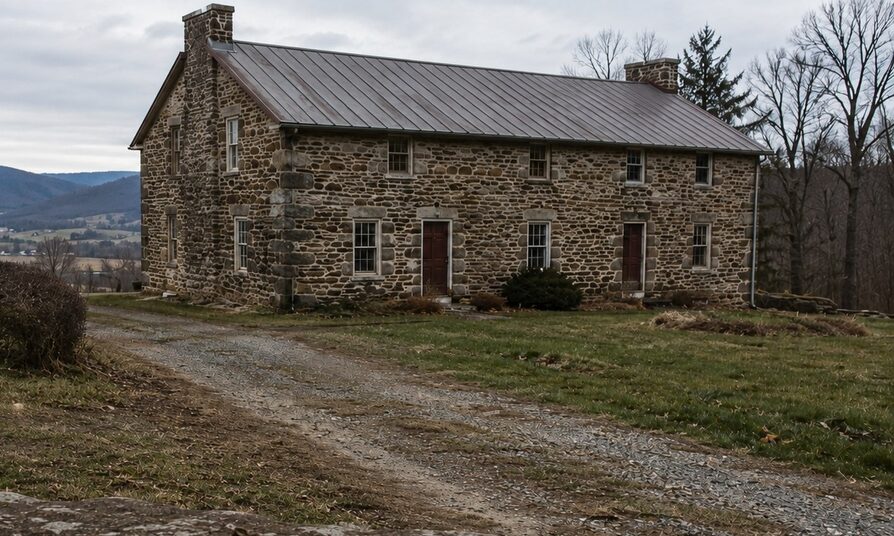
A buyer found a stone house built around 1820 in Augusta County.
It had walls nearly two feet thick, original floors, and the kind of presence that cannot be recreated through renovation or new construction. Where I grew up in Germany, walls like these would not be worth mentioning. In the Shenandoah Valley, they are close to irreplaceable, and properties like this one do not come onto the market twice in a decade.
The seller accepted an offer at a price both sides considered fair. The buyer understood what made the house unusual. The seller understood what they owned. I had examined the property, the market, and the limited number of relevant historic sales available.
Then the bank appraisal arrived.
It valued the house at $80,000 below the contract price.
The property had not suddenly become worth less. The problem was that a standard appraisal method had been applied to a property that was anything but standard.
The Appraisal Compared the Wrong Properties
Most residential appraisals rely heavily on recent comparable sales within the same geographic area.
For a conventional home, that approach is usually reasonable. A house built in the 1990s may be compared with other nearby homes of a similar age, size, condition, and construction.
But there were no recent sales in the ZIP code that genuinely resembled this house.
Instead, the appraisal compared a roughly 200-year-old stone property with ranch-style homes built in the 1990s. Those were the recent sales available nearby, so those were the sales that went into the report.
On paper, the historic house looked overpriced.
The math was not necessarily incorrect. The method was wrong for the asset.
A modern ranch and an early nineteenth-century stone house may have similar square footage, bedroom counts, or acreage. That does not make them competitors. They attract different buyers, offer different materials, carry different restoration considerations, and occupy entirely different positions in the market.
The appraised value was only as relevant as the properties used to support it.
Why Historic Home Appraisals Come in Low
A historic home appraisal in Virginia can be difficult because the most meaningful comparable sales may not be nearby or recent.
A relevant sale could be located in Staunton, elsewhere in Augusta County, or several counties away. It may have closed years earlier because properties of similar age, construction, condition, and architectural integrity rarely change hands.
That creates a conflict between geographic proximity and actual similarity.
The closest sale may be a conventional house with no architectural connection to the subject property. A more distant sale may be the only one that reflects the craftsmanship, scarcity, restoration potential, and buyer demand associated with a significant historic home.
Both sales may belong in the analysis, but they should not carry equal weight simply because one is located in the same ZIP code.
Historic properties often require a wider search and more interpretation than standard appraisal templates naturally encourage.
A Low Appraisal Can Put the Entire Sale at Risk
An $80,000 appraisal gap is not a minor negotiating issue.
The lender bases its loan on the lower of the appraised value and the contract price. If the appraisal comes in low, the buyer may need to bring significantly more cash to closing.
The alternatives are rarely attractive. The seller reduces the price by $80,000. The buyer covers the difference in cash. The parties attempt to negotiate a compromise. The appraisal is challenged through the lender. Or the transaction falls apart.
In this case, neither party had acted unreasonably.
The buyer had not overpaid impulsively. The seller had not invented an unsupported price. The financing process had simply failed to document the characteristics that made the house valuable.
This is where many historic-property transactions begin to unravel. The buyer still wants the house, and the seller still believes in the agreed-upon value, but the loan cannot move forward without additional support.
A Second Appraisal Changed the Outcome
A buyer cannot simply commission a replacement appraisal and hand it to the bank. The path runs through the lender.
We submitted a reconsideration of value, documented the historic sales the first report had overlooked, and the lender agreed to order a second appraisal from an appraiser who had previously valued historic property.
Instead of treating the house as an unusually old version of a conventional residence, the second appraiser examined it as a distinct asset. The analysis considered more relevant historic-property sales and gave appropriate weight to the home’s construction, original materials, scarcity, and restoration potential.
Additional documentation also established that the property qualified for Virginia’s Historic Rehabilitation Tax Credit.
Virginia’s program provides a state income-tax credit equal to 25 percent of eligible rehabilitation expenses for qualifying, certified projects. Eligibility depends on the property, the scope of work, and compliance with the applicable rehabilitation standards.
That did not mean the tax credit could simply be added dollar for dollar to the appraised value. It did, however, provide important context about the property’s financial potential for a buyer planning qualified restoration work.
The value had been present from the beginning. It required an appraiser who knew where to look and documentation capable of supporting it.
The transaction eventually closed after a 45-day extension.
Appraisal Risk Begins Before the Offer Is Accepted
Sellers often think about the appraisal only after a buyer is under contract. With a historic or character property, that is too late to begin considering the risk.
A pricing and marketing strategy should anticipate the questions a lender’s appraiser is likely to ask:
- Which historic sales provide the strongest comparisons?
- How far beyond the immediate market should the search extend?
- Which original features contribute to the property’s appeal?
- Has restoration work been documented?
- Does the property have recognized historic status or potential tax-credit eligibility?
- Are the house, acreage, and outbuildings being evaluated appropriately?
- Which characteristics make conventional nearby sales less relevant?
Preparing this information does not guarantee a particular appraisal result. It does create a more defensible record of how the asking price and contract price were established.
It also gives the parties more options if the first appraisal fails to reflect the property accurately.
Pricing a Historic Home Requires More Than a Spreadsheet
A bank appraisal is an opinion of value supported by a particular set of data. It is not an infallible declaration of what a property is worth. A number without the right comparisons behind it is not a value. It is only a number.
For standard housing, the available sales may make that opinion relatively straightforward. For a two-century-old stone house, the quality of the conclusion depends heavily on whether the appraiser understands the property and selects comparisons that reflect the same market.
The first appraisal in this transaction saw a house that cost more than the nearby ranch homes.
The second saw a scarce historic property that happened to share a ZIP code with them.
That distinction held the transaction together.
Call Matthias John If You Are Selling a Historic Property in Central Virginia
If you are preparing to sell a historic or character property in Augusta County, Staunton, Rockbridge County, Albemarle County, Nelson County, or elsewhere in Central Virginia and the Shenandoah Valley, appraisal risk belongs in the conversation before the property reaches the market, not after.
I can help identify relevant comparable sales, document the characteristics that support the property’s value, and build a pricing strategy designed to withstand scrutiny during financing.
Explore my seller resources or request a home valuation to begin the conversation.
Some details of this transaction have been altered to protect client confidentiality.

Matthias John is a licensed REALTOR® serving Central Virginia since 2014. With dual Master’s degrees in Public Policy & Governance and Political Science & Linguistics, he brings analytical expertise to every real estate transaction.
Originally from Germany and multilingual, Matthias combines international perspective with deep local knowledge of the Charlottesville market. His background in public policy and sales enables him to navigate complex negotiations and regulatory requirements with precision.
Matthias specializes in helping both first-time homebuyers and property investors find opportunities that match their specific needs. His data-driven approach and commitment to transparent communication have earned him recognition among clients for his integrity and thoroughness.
As a longtime resident of Central Virginia, Matthias leverages his community connections and market insights to create customized marketing strategies for sellers and targeted property searches for buyers.
Member: National Association of REALTORS®, Virginia Association of REALTORS®