

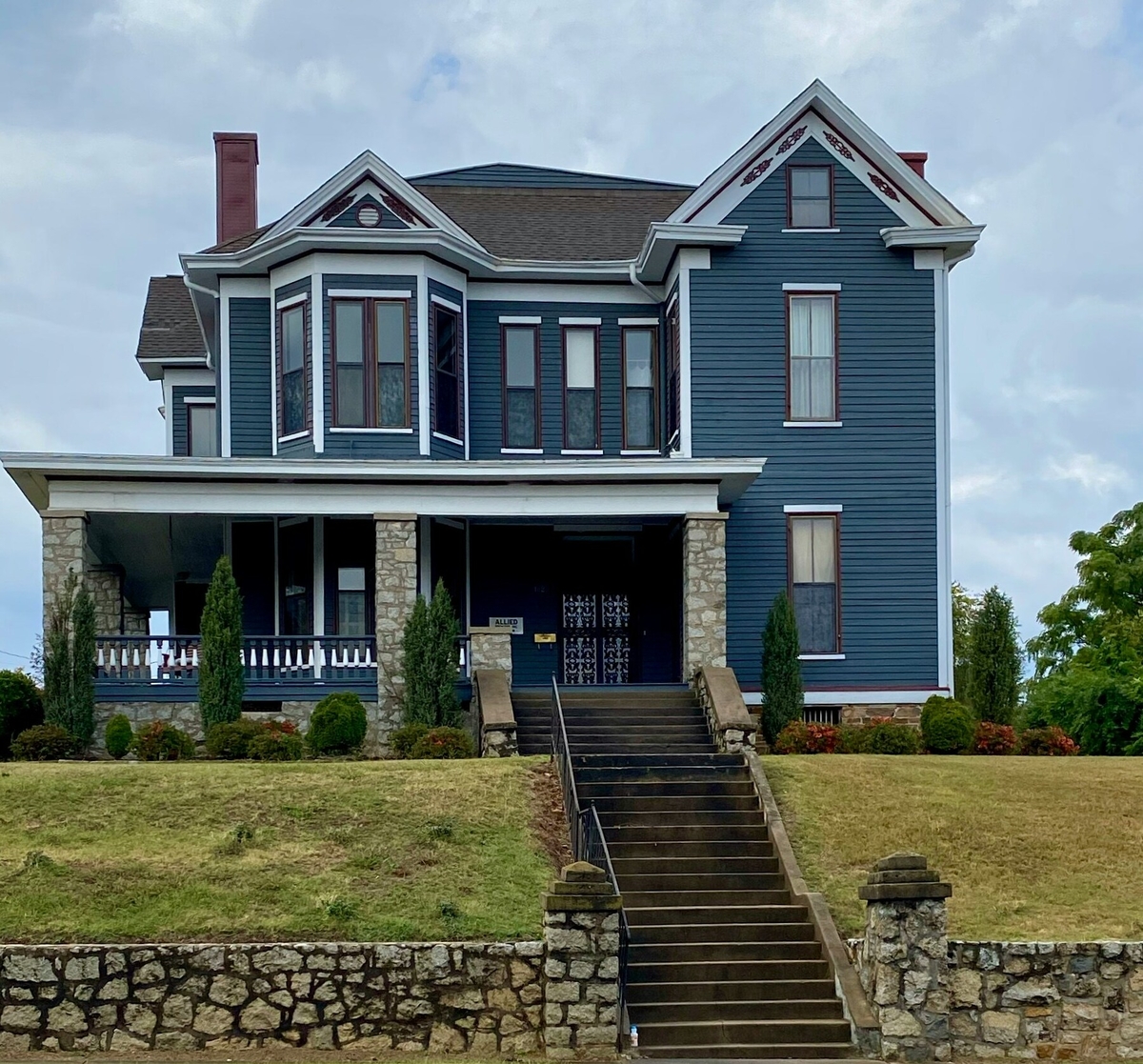
Determining how to price a historic home in Virginia is rarely as simple as reviewing recent neighborhood sales. Historic and character properties may have distinctive architecture, original materials, documented provenance, unusual acreage, or substantial restoration needs that cannot be measured through standard comparable sales alone.
When I price a stone house built two centuries ago, I may have only one remotely comparable sale to work from. It could be two counties away, in a different condition, and three years old. That sale still provides useful information, but it is a reference point, not an answer.
Anyone who treats a comparable sale like that as a definitive valuation is guessing with a spreadsheet.
Historic property pricing requires a broader understanding of the property, the buyer most likely to value it, and the risks that could arise during the sale. Getting those decisions wrong can cost a seller far more than additional time on the market. Call me if you have specific questions about your historic home at 434-906-4630.
Comparable Sales Do Not Tell the Whole Story
Most residential pricing begins with comparable sales, or “comps.” An agent looks for recently sold homes with similar locations, square footage, acreage, bedroom counts, and overall condition.
That method works best when there are enough genuinely similar properties nearby.
Historic properties rarely offer that luxury. A nineteenth-century house outside Lexington may have little in common with the conventional homes that recently sold nearby. Even another house of a similar age may differ substantially in its architecture, restoration quality, acreage, outbuildings, original materials, and historic significance.
A broader geographic search may reveal another historic sale in Staunton, Albemarle County, or elsewhere in the Shenandoah Valley. That sale may help establish a range, but it still needs to be adjusted for the differences that matter to historic-property buyers.
The goal is not to find a single comp and force the property to match it. The goal is to build a defensible pricing case from several imperfect but relevant data points.
The Strongest Buyer May Not Be Local
The buyer for a significant historic property is often conducting a regional or national search.
Someone considering a manor in Rockbridge County may also be comparing it with properties in the Hudson Valley, the Pennsylvania countryside, or other historic markets along the East Coast. They are not necessarily choosing between that property and a newer home in the closest subdivision.
Pricing the house entirely against local residential comps may establish a number for a buyer who was never going to pay the most.
A local buyer may see an old house with expensive maintenance requirements. A preservation-minded buyer from outside the area may see rare architecture, privacy, craftsmanship, acreage, and the opportunity to become the next steward of an important property.
Correct pricing begins with identifying who is genuinely competing for the home. In many cases, that audience extends far beyond the county line.
Historic Rehabilitation Tax Credits Can Affect Value
Virginia’s Historic Rehabilitation Tax Credit provides a state income-tax credit equal to 25 percent of eligible rehabilitation expenses for qualifying projects. Eligibility and approval depend on the property and the proposed rehabilitation, so owners and buyers should verify the details with the Virginia Department of Historic Resources and qualified tax professionals.
To a buyer planning a major restoration, potential eligibility can materially affect the financial equation.
Consider two houses that require the same amount of work. If one is eligible for the program and the other is not, they may not represent the same economic opportunity to an informed buyer. That distinction will not necessarily appear in a comparable sale.
When a listing fails to investigate or communicate potential eligibility, the seller may effectively subsidize the buyer who already understands it. The buyer recognizes an opportunity that the property’s pricing and marketing did not capture.
Before listing, the seller should understand whether the house is individually listed, located within a qualifying historic district, subject to preservation restrictions, or potentially eligible for rehabilitation incentives.
Condition Can Change the Entire Buyer Pool
Condition affects every home’s value, but the effect can be much greater with a historic property.
In modern housing, an older roof, outdated kitchen, or worn flooring will often move the price within a relatively predictable range. With a nineteenth-century property, the difference between “livable but needs work” and “full restoration project” can change the price ceiling by hundreds of thousands of dollars.
Each condition attracts a different buyer.
A restoration buyer may actively want a property that retains its original materials and has not been broadly modernized. That buyer may be prepared to manage plaster repair, masonry restoration, older systems, and specialized contractors.
A turnkey buyer may love historic architecture but have no interest in overseeing years of rehabilitation work.
Misjudge which condition the property is truly in and you risk losing both audiences. Price a full project as though it were simply dated, and the restoration buyer may walk away. Market a carefully restored property like a fixer-upper, and the turnkey buyer may never schedule a showing.
Both errors come out of the seller’s pocket.
Original Materials and Provenance Carry a Premium
Original millwork, hand-laid stone, heart-pine flooring, period mantels, early hardware, historic outbuildings, and documentation connecting a property to a known builder or previous owner can all contribute to value.
The difficulty is that these characteristics carry the greatest premium with buyers who recognize them.
One buyer sees original windows as inefficient. Another understands that they may be made from old-growth wood and can often be repaired rather than replaced. One person sees uneven flooring as a defect. Another sees evidence of a house that has stood for two centuries.
Part of pricing a historic home is refusing to let the buyer who does not understand the property set the number.
That is a positioning decision, and it must be made before the listing goes live. The photography, listing description, supporting documentation, distribution strategy, and asking price should all be designed to reach buyers who appreciate what makes the property difficult to replace.
Renovating Before Selling Can Lower the Value
Owners often assume that renovating before a sale will automatically produce a higher price. That is not always true with historic and character properties. I have watched owners spend heavily to modernize a house while removing the exact features a serious historic-property buyer would have paid to preserve.
Replacing original millwork, removing plaster, opening a traditional floor plan, installing finishes that conflict with the architecture, or replacing repairable historic windows may make a house appear newer while making it less desirable to its strongest buyer.
Good work aimed at the wrong buyer is still the wrong work.
Before renovating a historic property for sale, the question is not simply whether the finished house will look better. The more important question is whether the work moves the property toward its strongest buyer or away from that buyer.
In many cases, strategic repairs, cleaning, stabilization, landscaping, and documentation will produce a better return than a broad modernization project.
Sellers considering improvements should speak with an agent who understands historic-property buyers before making irreversible changes. My seller resources provide a starting point for preparing a Central Virginia property for market.
Appraisal Risk Should Be Considered Before Listing
Even when the seller and buyer agree on value, the financing appraisal can create another challenge. Bank appraisers generally rely on standardized valuation methods and recent comparable sales. When few relevant historic sales exist, an appraiser may compare the property with modern construction or conventional homes that share its square footage but none of its architectural significance.
The result may be a low appraisal delivered in the middle of the contract period. At that point, the seller may be asked to lower the price, the buyer may need to contribute additional cash, or the transaction could fall apart. There is far less room to reposition the property once it is already under contract.
I price historic properties with appraisal exposure in mind from the beginning. That may involve:
- Identifying relevant sales across a broader geographic area
- Documenting restoration and preservation work
- Explaining the significance of original architectural features
- Establishing potential rehabilitation incentives
- Separating the value of acreage and outbuildings
- Preparing evidence that supports the agreed-upon price
Finding out about appraisal risk shortly before closing is the most expensive way to learn that the property was not positioned correctly.
How to Price a Historic Home Before Selling
The right price for a historic or character property does not come from entering a few nearby sales into a formula.
It comes from understanding the property’s strongest buyer, identifying the features that create a premium, evaluating its true condition, accounting for appraisal exposure, and positioning the home within the market where it will be taken seriously.
Before establishing an asking price, I consider:
- Which local and regional sales are genuinely relevant
- Whether the likely buyer is local or searching nationally
- How much original material remains
- Whether the property has documented architectural or historic significance
- Whether its condition calls for a restoration buyer or a turnkey buyer
- Whether tax-credit eligibility or preservation restrictions may affect value
- How the property is likely to be evaluated during a financing appraisal
That process requires more work before the home goes live, but it gives the seller a stronger foundation for marketing, negotiations, appraisal, and closing.
A historic home should not be priced as though it were simply an older version of a modern house. Its value often lies in the qualities that standard valuation methods are least equipped to measure.
Speak With Local Realtor Matthias John About Selling Your Historic Home Today
If you are considering selling a historic, architecturally significant, or character property in Charlottesville, Albemarle County, Staunton, Lexington, Rockbridge County, or elsewhere in Central Virginia and the Shenandoah Valley, I can help you evaluate what makes it valuable and identify the buyer most likely to recognize it.
You can begin by requesting a home valuation or contacting me to discuss the property before you renovate, establish an asking price, or bring it to market.
Frequently Asked Questions About Selling a Historic Home in Central Virginia
How do you determine the value of a historic home?
The value of a historic home is determined by examining relevant local and regional sales, condition, architectural integrity, original materials, acreage, provenance, restoration quality, buyer demand, and appraisal risk. Comparable sales remain important, but they usually need more interpretation than they would for a conventional home.
Are historic homes harder to sell?
Historic homes can take longer to sell when they are marketed to a general residential audience. However, a well-positioned property can attract buyers searching specifically for historic architecture, acreage, craftsmanship, or restoration opportunities. Reaching the correct audience is often more important than reaching the largest audience.
Should I renovate a historic house before selling it?
Not necessarily. Repairs and stabilization may improve marketability, but broad modernization can remove the features that historic-property buyers value most. Before completing major work, sellers should consider whether the renovation will appeal to the property’s strongest buyer.
Can a historic home appraise below its sale price?
Yes. A historic property may appraise below the contract price when there are few comparable sales or when the appraiser relies on modern homes that do not reflect the property’s architecture, provenance, restoration, or unique features. Preparing documentation before the appraisal can help explain and support the property’s value.
Do historic tax credits increase a home’s value?
Potential eligibility may increase the property’s financial appeal to a buyer planning qualified rehabilitation work. However, eligibility is not automatic, and the value will depend on the property, the scope of work, program requirements, and the buyer’s ability to use the credit.

Matthias John is a licensed REALTOR® serving Central Virginia since 2014. With dual Master’s degrees in Public Policy & Governance and Political Science & Linguistics, he brings analytical expertise to every real estate transaction.
Originally from Germany and multilingual, Matthias combines international perspective with deep local knowledge of the Charlottesville market. His background in public policy and sales enables him to navigate complex negotiations and regulatory requirements with precision.
Matthias specializes in helping both first-time homebuyers and property investors find opportunities that match their specific needs. His data-driven approach and commitment to transparent communication have earned him recognition among clients for his integrity and thoroughness.
As a longtime resident of Central Virginia, Matthias leverages his community connections and market insights to create customized marketing strategies for sellers and targeted property searches for buyers.
Member: National Association of REALTORS®, Virginia Association of REALTORS®