

Most relocation guides answer the questions people think they should ask before moving to Charlottesville: school rankings, housing market statistics, popular neighborhoods, and lists of things to do.
Those are useful starting points. But the questions that actually shape a buying decision tend to come later, between showings, during a drive through Albemarle County, or once we’ve moved beyond the brochure version of the area.
I work with buyers relocating to Charlottesville and Central Virginia from Northern Virginia, the Northeast, the West Coast, and abroad, including Germany. Over the years, I’ve noticed that the same practical questions come up again and again.
If you’re still exploring the region, my guide to moving to Charlottesville offers a broader overview. Here, I’ll address eight questions buyers ask me when they get serious about finding a home.
1. How Different Can Two Charlottesville-Area Communities Twenty Minutes Apart Really Be?
Very. This surprises relocating buyers more than almost anything else.
Twenty minutes can change your jurisdiction, property tax rate, school district, internet options, and even whether the road leading to your house is paved.
Consider the difference between Downtown Charlottesville and Earlysville, roughly 15 to 20 minutes north of the city, depending on where you’re going.
In Downtown Charlottesville, you might choose a historic rowhouse or condominium within walking distance of restaurants, entertainment, and the Downtown Mall. Parking, smaller lots, and proximity to neighboring properties may be important considerations.
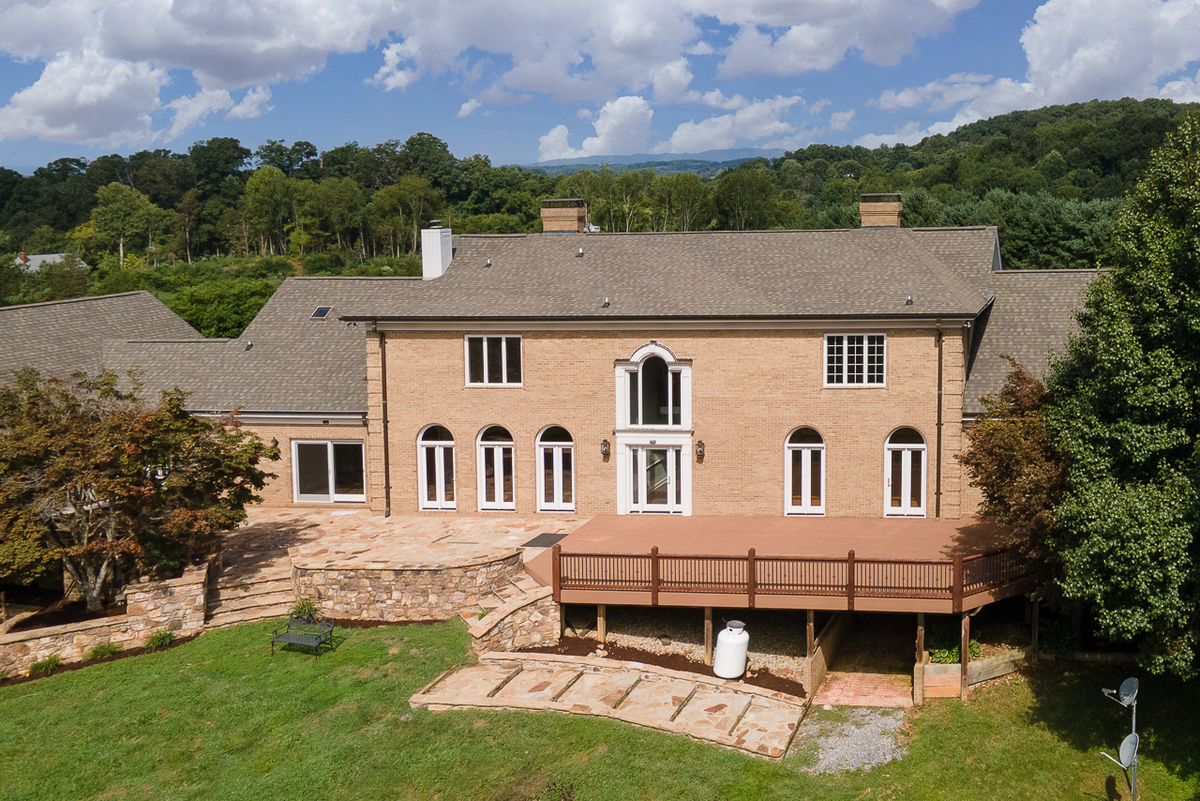
In Earlysville, you may find a home on several acres, with a longer driveway, more privacy, and a greater reliance on driving for everyday errands. Depending on the property, you may also need to think about well water, septic systems, and maintaining a larger piece of land.
Neither is inherently better. They’re simply different ways of living.
It’s also worth remembering that Charlottesville is an independent city, separate from Albemarle County, even though the county surrounds it.
This is why I push back when buyers draw a circle around Charlottesville on a map and call it their search area.
The region isn’t a gradient that thins out evenly from downtown. It’s a collection of distinct places, and the right one depends on how you want to live, not drive time alone.
2. Can We Buy a Home in Charlottesville Without Being There?
Yes, and my clients regularly do.
When buyers can’t attend showings in person, I tour properties on their behalf and report on what the listing photos leave out.
That includes road noise, the slope of the property, what neighboring homes and land actually look like, and how much natural light the house receives.
A wide-angle photograph can make a room feel larger than it does in person. A beautifully framed exterior shot may not tell you how close the neighboring house sits or how steep the driveway is.
These things matter, especially when you’re making a significant financial decision from hundreds or thousands of miles away.
I use live video calls from inside the house rather than relying on marketing clips. I want buyers to understand the property’s weaknesses before they commit, not discover them afterward.
My advice is usually to fly in once, at the shortlist stage, rather than for every showing.
I’ve closed purchases where the buyers stood inside their new home for the first time after it was already theirs.
That isn’t for everyone, and it doesn’t eliminate the need for appropriate inspections and due diligence. But with thorough preparation and honest reporting, buying a home remotely can work more often than people expect.
3. Is Internet Access Actually a Problem in Rural Central Virginia?
Less and less, and this is one of the most underreported changes in our region.
Over the past several years, rural broadband expansion has opened up possibilities for buyers who want to live in the country while continuing to work remotely.
Firefly Fiber Broadband, in particular, has expanded high-speed fiber service across Central Virginia, reaching areas where residents previously had far more limited internet options.
That changes the equation for someone considering a mountain property, farm, or rural home outside Charlottesville.
But coverage is property-specific, not county-specific.
Fiber may be available at one address and unavailable at another nearby property. A listing that advertises high-speed internet also doesn’t necessarily tell you which providers serve the address or what speeds are actually available.
I check connectivity before my clients write an offer, particularly when they work remotely.
For those buyers, internet service isn’t a minor convenience. It can determine whether the property works for their lives at all.
4. We’ve Never Had a Well or Septic System. Should We Be Worried?
No, but you should be informed.
Many rural properties around Charlottesville rely on private wells and septic systems rather than municipal utilities. For someone moving from a city or suburb, that can feel unfamiliar.
Both systems are ordinary parts of country ownership, but they deserve proper investigation before purchasing.
I walk buyers through what the inspections cover, how maintenance works, and what we need to understand about the age, condition, and capacity of each system.
One especially important detail is septic capacity.
A septic system’s permitted capacity may limit the number of bedrooms a home can support. If you’re planning an addition or major renovation, you need to understand that before buying, not after you’ve hired an architect.
Available permits and system records can help establish what was approved, while a professional inspection helps evaluate the system’s current condition.
The Virginia Department of Health provides useful guidance on these considerations and how to obtain available records from local health departments.
This is a matter of diligence, not a reason for fear.
I’ve found that buyers who worry about wells and septic systems often simply haven’t had someone explain how they work.
5. What Does Our Budget Actually Buy in Charlottesville?
Usually more than where you’re coming from, particularly for buyers relocating from Northern Virginia or the Northeast. But not everywhere.
Close-in Charlottesville and parts of Albemarle County can hold their value firmly, especially when buyers prioritize convenience, established neighborhoods, or proximity to UVA.
Travel farther into the surrounding countryside, and the same budget may provide opportunities for more acreage, privacy, or mountain views.
The question is what you’re willing to trade.
A larger property may mean maintaining a long gravel driveway, paying for tree work, or spending more time in the car. A smaller home near town may offer conveniences that are harder to appreciate until you’ve lived without them.
This is why I prefer to understand a buyer’s priorities before discussing which areas offer the best value.
I also give relocating buyers two practical pieces of financial advice.
First, don’t stop at the purchase price. Include closing costs, taxes, insurance, inspections, and ongoing maintenance in the budget from the start. I’ve written more about these considerations in my article on the hidden costs of buying a home in Charlottesville.
Second, talk to at least two lenders and compare their estimates.
Interest rates matter, but so do lender fees, loan terms, and the lender’s ability to perform within a contract timeline.
The first quote rarely gives you the full picture.
6. How Are the Schools, and What Are the Neighborhoods Like?
I answer this question a little differently than some buyers expect, and I think the reason deserves a straightforward explanation.
Fair housing laws prohibit discriminatory steering, including directing buyers toward or away from neighborhoods based on protected characteristics.
That doesn’t mean real estate agents can’t discuss schools or share objective information. But I don’t believe my personal opinion should determine which school or neighborhood a buyer considers suitable.
Instead, I direct buyers to resources such as the Virginia Department of Education’s School Quality Profiles, where they can compare publicly available information and apply their own standards.
I also encourage buyers to verify school assignments for a specific address directly with the relevant school division.
When discussing neighborhoods, I focus on characteristics I can speak to directly: commute times, land, noise, convenience, traffic patterns, and how a location functions day to day.
The goal isn’t to tell you which neighborhood you should prefer. It’s to give you reliable information so you can make that decision yourself.
7. Is Charlottesville Just a College Town?
UVA shapes Charlottesville, but the underlying economy is broader than many visitors expect.
The university and its health system are major employers, but the region also has a substantial food and wine industry, cultural attractions, and a growing entrepreneurial community.
Biotechnology is a particularly interesting part of that development.
Charlottesville is home to a growing network of life sciences companies and medical startups, supported by organizations such as CvilleBioHub.
The University of Virginia’s Paul and Diane Manning Institute of Biotechnology, currently under development, represents another significant investment in the region’s research and innovation infrastructure.
That doesn’t mean the job market is equally strong in every profession, but it does mean Charlottesville offers more than university-related employment.
People move here for careers, not only retirement or access to the mountains.
In practical terms, Charlottesville has jobs, restaurants, cultural attractions, outdoor recreation, and a regional airport.
The town doesn’t empty out in June.
8. How Quickly Do We Have to Decide When Buying a Home?
It depends entirely on the segment of the market you’re entering.
A well-priced home close to Charlottesville can attract serious interest within a weekend. Acreage, estates, and unusual rural properties may move on a completely different schedule, sometimes months and occasionally years.
Both situations can be normal for the type of property involved.
Relocating buyers sometimes make the mistake of treating every listing with the same urgency. They either feel pressured to move too quickly or hesitate when the market actually demands a timely decision.
Part of my job is explaining how your particular segment behaves.
That means reviewing comparable sales, recent listing activity, the property’s characteristics, and how much competition there is for similar homes.
I don’t want clients rushing simply because a listing is new. I also don’t want them losing a suitable property because they misunderstood the market.
For buyers who want to understand the process before getting started, I’ve put together a step-by-step guide to buying a home in Charlottesville.
Once you understand the pace of your segment, you can be decisive when it matters and patient when it doesn’t.
Start the Conversation Before You Visit Charlottesville
If you’re considering a move to Charlottesville, Albemarle County, the Shenandoah Valley, or elsewhere in Central Virginia, the first conversation doesn’t require a trip, a pre-approval, or even a firm decision to move.
We can simply talk about whether the move makes sense, what your budget might buy, and which parts of the region fit the life you have in mind.
You can learn more about how I help buyers in Charlottesville and Central Virginia or reach out whenever you’re ready.
I’m glad to answer your questions, including the ones you haven’t thought to ask yet.
The questions reflect real conversations with relocating buyers. Some details have been generalized to protect client confidentiality.

Matthias John is a licensed REALTOR® serving Central Virginia since 2014. With dual Master’s degrees in Public Policy & Governance and Political Science & Linguistics, he brings analytical expertise to every real estate transaction.
Originally from Germany and multilingual, Matthias combines international perspective with deep local knowledge of the Charlottesville market. His background in public policy and sales enables him to navigate complex negotiations and regulatory requirements with precision.
Matthias specializes in helping both first-time homebuyers and property investors find opportunities that match their specific needs. His data-driven approach and commitment to transparent communication have earned him recognition among clients for his integrity and thoroughness.
As a longtime resident of Central Virginia, Matthias leverages his community connections and market insights to create customized marketing strategies for sellers and targeted property searches for buyers.
Member: National Association of REALTORS®, Virginia Association of REALTORS®