

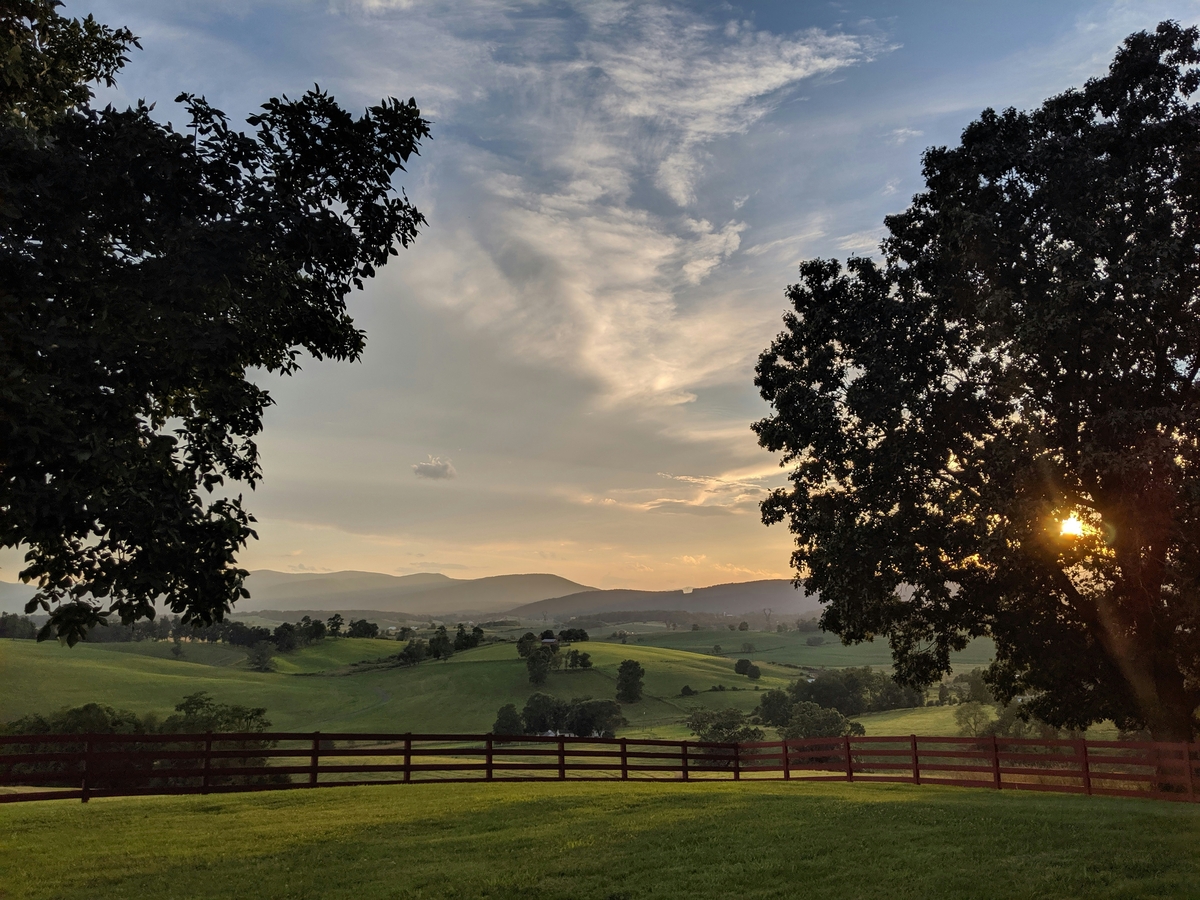
There is a tendency to treat real estate pricing as if it follows one universal formula. Price per square foot. Recent comparable sales. Acreage multiplied by a regional average. In many markets, that approach works reasonably well. The Shenandoah Valley is not one of those markets.
Across communities throughout Augusta County, Rockbridge County, and the surrounding Valley region, properties often carry layers of agricultural, historical, and generational significance that do not fit neatly into standard residential valuation models. Two parcels can sit side by side with nearly identical acreage and entirely different value structures depending on how the land functions, how it has been used historically, and what rights are attached to it.
That is part of what makes the Valley such a fascinating real estate market. It also means buyers and sellers benefit from working with someone who understands how this region actually behaves.
Working Farms and Lifestyle Farms Price Differently
One of the most misunderstood aspects of Shenandoah Valley real estate is the difference between productive agricultural land and lifestyle acreage.
On paper, two properties may appear nearly identical. Both might have 40 acres, a farmhouse, a barn, and mountain views. Yet one may command a dramatically different valuation because the land itself is functioning as an agricultural asset rather than simply a residential setting.
Productive farmland is typically valued based on factors like:
- Soil classification
- Water access
- Tillable acreage
- Drainage
- Existing fencing and infrastructure
- Agricultural productivity
- Equipment access and operational efficiency
In those cases, buyers are often evaluating the property through the lens of income production and long-term land utility. Kitchen renovations and cosmetic finishes may matter far less than whether the ground can support livestock, crops, or operational expansion.
Lifestyle farms operate differently. Buyers in that category are often prioritizing aesthetics, privacy, architecture, recreation, or the emotional experience of owning land in the Valley. The value may be tied more closely to views, design, equestrian amenities, or proximity to Charlottesville and surrounding destinations.
The challenge is that both categories frequently exist within the same zip code and can appear superficially similar online.
You can stand in the same field and be looking at two completely different assets depending on the questions you are asking about them. Conflating those categories is one of the most common pricing mistakes in the region.
Generational Land Rarely Comes With Clean Comparable Data
Some of the Shenandoah Valley’s most significant properties never fully enter the public market.
Land often transfers through private family transactions, estates, agricultural partnerships, or conservation structures that bypass MLS entirely. When these properties do appear publicly, the historical data attached to them is often incomplete or misleading.
That creates a challenge for anyone relying exclusively on automated valuation tools or surface-level comparable sales.
In particular, conservation easements materially change how land must be evaluated. Easement properties permanently restrict development rights, which affects both use potential and market value. Using unencumbered land sales to value easement property, or vice versa, can produce inaccurate conclusions very quickly.
Understanding this category requires more than pulling nearby acreage sales from a database. It often depends on knowing the local transaction history that never appeared online in the first place.
Some of the most interesting properties in the Valley have no meaningful MLS history at all. Instead, they come with a family story, agricultural legacy, or land record trail that stretches back generations.
In Augusta County, public land records extend back to the 1740s. In some cases, a modern listing represents the first time a parcel has ever been publicly offered. That context matters.
Many of these opportunities also emerge quietly through private relationships and local networks rather than broad public exposure. Similar dynamics are discussed in How a Realtor’s Network Unlocks Off-Market Homes in Charlottesville, where local connections often shape access to unique properties before they ever become widely visible online.
The Valley’s Historic Architecture Is Its Own Category
The Shenandoah Valley also has an architectural identity that differs significantly from nearby Charlottesville and Central Virginia markets.
The region was heavily settled by German and Scots-Irish immigrants, and the built environment reflects those influences. Limestone homes, spring houses, and bank barns developed from practical agricultural needs and regional building traditions rather than formal European-inspired design ideals.
Charlottesville’s historic architecture tends to follow a more Jeffersonian and English-influenced pattern. Neither tradition is inherently superior, but they are distinct.
One of the best examples of Valley ingenuity is the German bank barn.
Built directly into hillsides, these structures allowed wagons to access the upper level from the elevated side while livestock remained sheltered below during the winter months. They are remarkably efficient pieces of vernacular engineering that solved practical farming challenges long before modern mechanized agriculture.
Many people drive past them every day without fully understanding what they are looking at.
Communities throughout Lexington, Staunton, and the surrounding Valley areas still showcase many of these historic agricultural structures and long-held family properties.
Buyers who recognize the provenance and historical significance of these structures often value them very differently from buyers who simply see an old barn.
That gap between informed and uninformed buyers is where representation becomes incredibly important.
Why Local Knowledge Matters in the Shenandoah Valley
The Shenandoah Valley does not always behave like a conventional suburban market because much of its value is tied to things that cannot be easily reduced to a spreadsheet.
Agricultural productivity, conservation restrictions, generational ownership history, architectural provenance, and regional land traditions all influence value in ways that automated pricing models often fail to capture.
That is why local market knowledge matters here in a very real way.
A buyer looking for a productive farm, historic homestead, conservation property, or lifestyle acreage needs guidance from someone who understands the nuances behind the listing photos. Likewise, sellers benefit from positioning their property correctly so the right buyers understand what they are actually purchasing.
Understanding the difference between surface-level pricing and true regional market value is one reason many buyers and sellers choose to work with a local realtor who understands the Shenandoah Valley’s unique market dynamics. The Valley has its own market logic. Once you understand it, the pricing starts to make far more sense.
Speak With a Local Realtor at Matthias John Realty Today
If you are considering buying or selling property in the Shenandoah Valley, working with someone who understands the region’s agricultural, historical, and architectural context can make a significant difference. From working farms and conservation easements to historic homes and lifestyle acreage, every property category carries its own valuation logic.
Contact Realtor Matthias John today at 434-906-4630 or reach out through the contact form to discuss your real estate goals in the Shenandoah Valley.

Matthias John is a licensed REALTOR® serving Central Virginia since 2014. With dual Master’s degrees in Public Policy & Governance and Political Science & Linguistics, he brings analytical expertise to every real estate transaction.
Originally from Germany and multilingual, Matthias combines international perspective with deep local knowledge of the Charlottesville market. His background in public policy and sales enables him to navigate complex negotiations and regulatory requirements with precision.
Matthias specializes in helping both first-time homebuyers and property investors find opportunities that match their specific needs. His data-driven approach and commitment to transparent communication have earned him recognition among clients for his integrity and thoroughness.
As a longtime resident of Central Virginia, Matthias leverages his community connections and market insights to create customized marketing strategies for sellers and targeted property searches for buyers.
Member: National Association of REALTORS®, Virginia Association of REALTORS®